
Yoga Teacher Training: the Art of Teaching Hatha Vinyasa
Deepen your practice and study the craft of teaching in our foundational training.
One weekend a month, October 2026 through May 2027. One cohort, in person at Boulder Yoga Studio located just above Lucky's Bakehouse.
Sign up soon, spots are limited! Please fill out the application below, and then click the button to complete your deposit.
October 2026 through May 2027
-
$3500 in full, or 8 monthly payments of $437 with no interest.
$3100 early enrollment when you apply by September 20th.
A $500 deposit holds your spot and applies toward tuition.
Tuition includes all eight training weekends, your training manual, all Friday evening sessions, mentorship, assessment, and unlimited studio membership (valued at $129/ month) for the duration of the training so your required weekly class is covered.
Tuition does not include the Yoga Sutras and Bhagavad Gita translations, Trail Guide to the Body, or the online anatomy companion course, roughly $120 together.
Final sale, no cancellations, no refunds.
Questions? Email megan@boulderyogastudio.com. Real reply, from a real person.
Our inaugural cohort
Weekend 1 October 16-18, 2026 Weekend 2 November 13-15, 2026 Weekend 3 December 11-13, 2026 Weekend 4 January 8-10, 2027 Weekend 5 February 12-14, 2027 Weekend 6 March 12-14, 2027 Weekend 7 April 9-11, 2027 Weekend 8May 7-9, 2027
Friday 5:30 to 8:00pm Saturday 9:15am to 6:15pm, with optional Evening Yin 6:30 to 7:30pm Sunday 10:00am to 6:15pm
Cohort capped at 20.
What you will learn
Every aspect of the practice, from philosophy and lineage to the mechanics of the body, from how to build a class to how to hear your own voice in a room full of people.
Whether you want to teach or simply want to understand your own practice from the inside out, this is the beginning.
Asana, alignment, and teaching language
Applied anatomy, joint mechanics, and range of motion
Movement patterns, mobility, and stability
Pranayama, meditation, and the subtle body
Sequencing and full class design
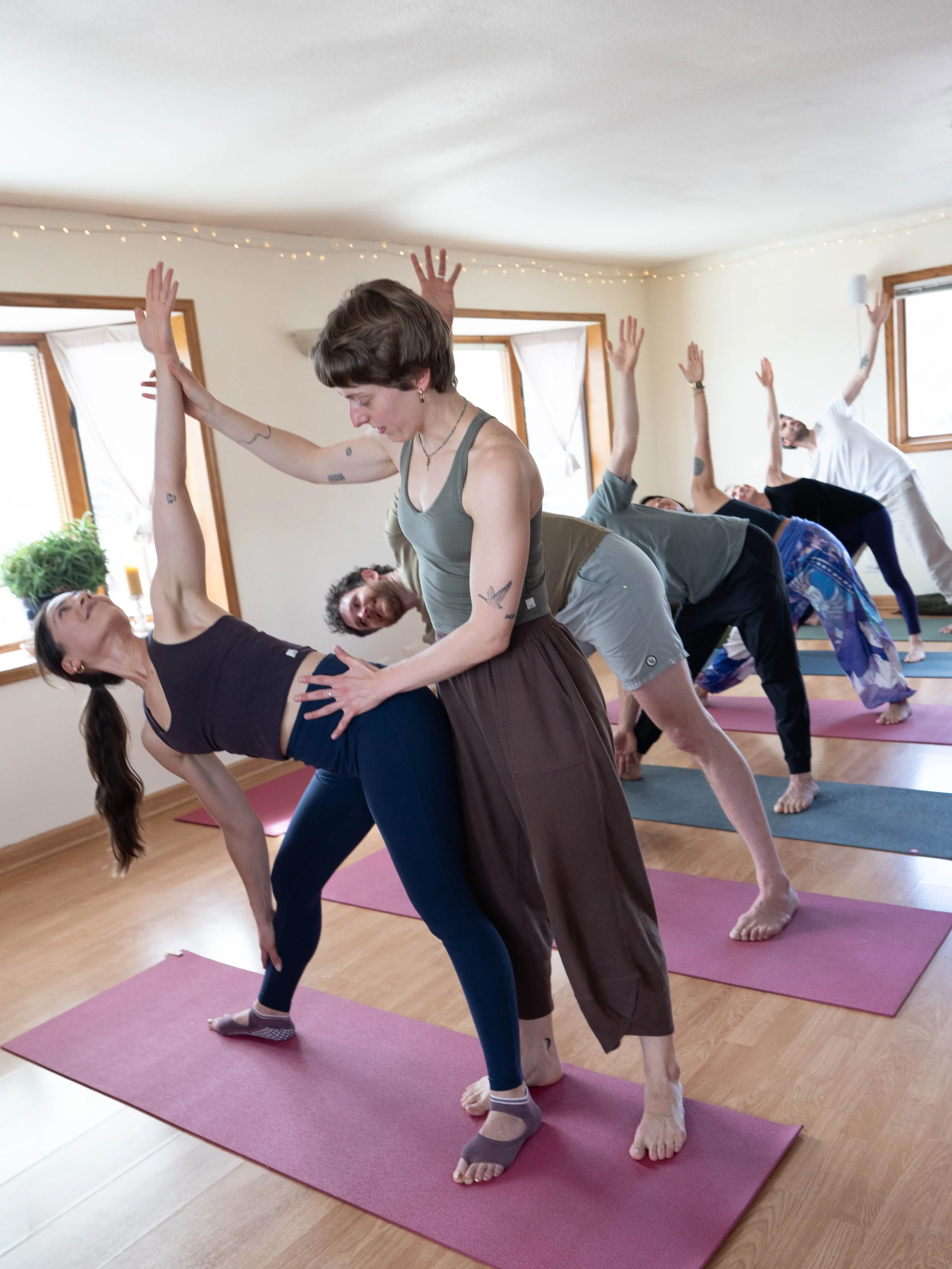
Hands-on assists, consent, and props
Adaptive teaching, injuries, prenatal, and special populations
Trauma-aware and inclusive teaching
The Yoga Sutras, the Bhagavad Gita, Samkhya, Tantra, and the eight limbs
Sanskrit, sound, chanting, and modern yoga history
Cultural context and teaching with integrity
Ethics, power, and scope of practice
The business of yoga: pricing, contracts, insurance, marketing, and finding your niche
How this training is built
-
Anatomy is not a lecture block here. Weekend 2 teaches muscle groups and bony landmarks in the same room where you are learning to teach sun salutations. Weekend 3 teaches the nervous system, fascia, and vagus nerve alongside pranayama. Weekend 6 teaches injury and adaptation while you learn to modify every major pose three ways. You feel each region in your own body before you see it named on a slide.
-
You will cue a ten minute sequence to a partner on the first Saturday. There is a teaching lab in every single weekend, a feedback framework introduced in Weekend 1 and used for eight months, and by Weekend 7 you are teaching 30 to 45 minute classes with faculty taking detailed notes. Standing in front of a room becomes familiar long before it is assessed.
-
One weekend a month gives you time to absorb, try things, get it wrong, and come back with questions. The gaps are where the learning settles.
-
You go through this with the same people. You practice teach on each other for eight months and leave with a group of colleagues who know your teaching and want you to be good at it.
-
The training follows a single arc: ground, body, breath, mind, action, adaptation, profession, integration. Three threads run through that arc in parallel, and every weekend all three point at the same thing.
Our Teaching Faculty
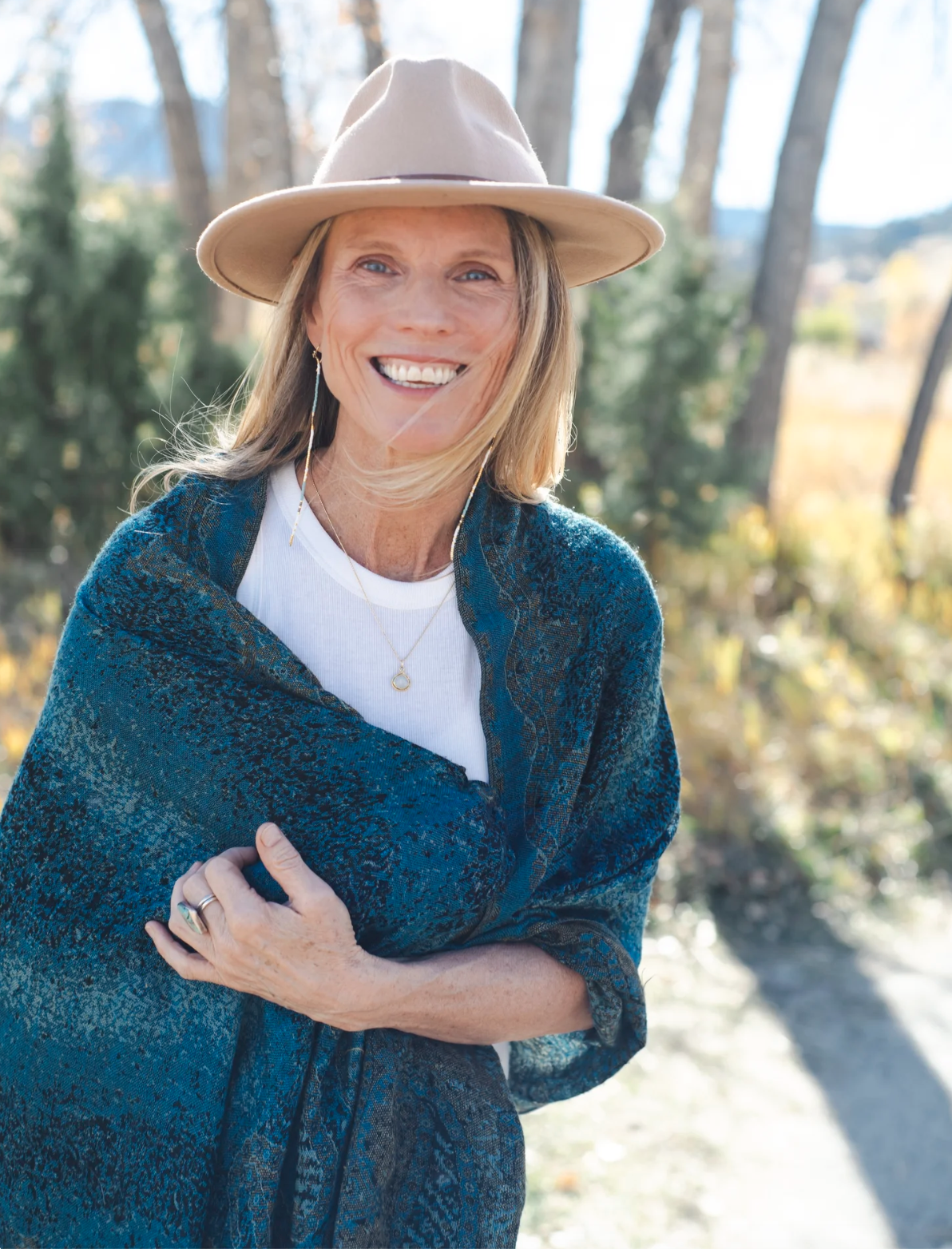
Alison Litchfield
Founding Teacher, Hatha Yoga, Rolfer®, AuthorAlison Litchfield is an author, E-RYT 500 Yoga Instructor with over 30 years of teaching experience, Certified Rolfer®, and Rolf Movement–inspired practitioner. She began practicing yoga in Boulder in 1990, back when Boulder was still weird, and yoga was, too—drawn to the practice as a way to soften intensity and reconnect with the body.
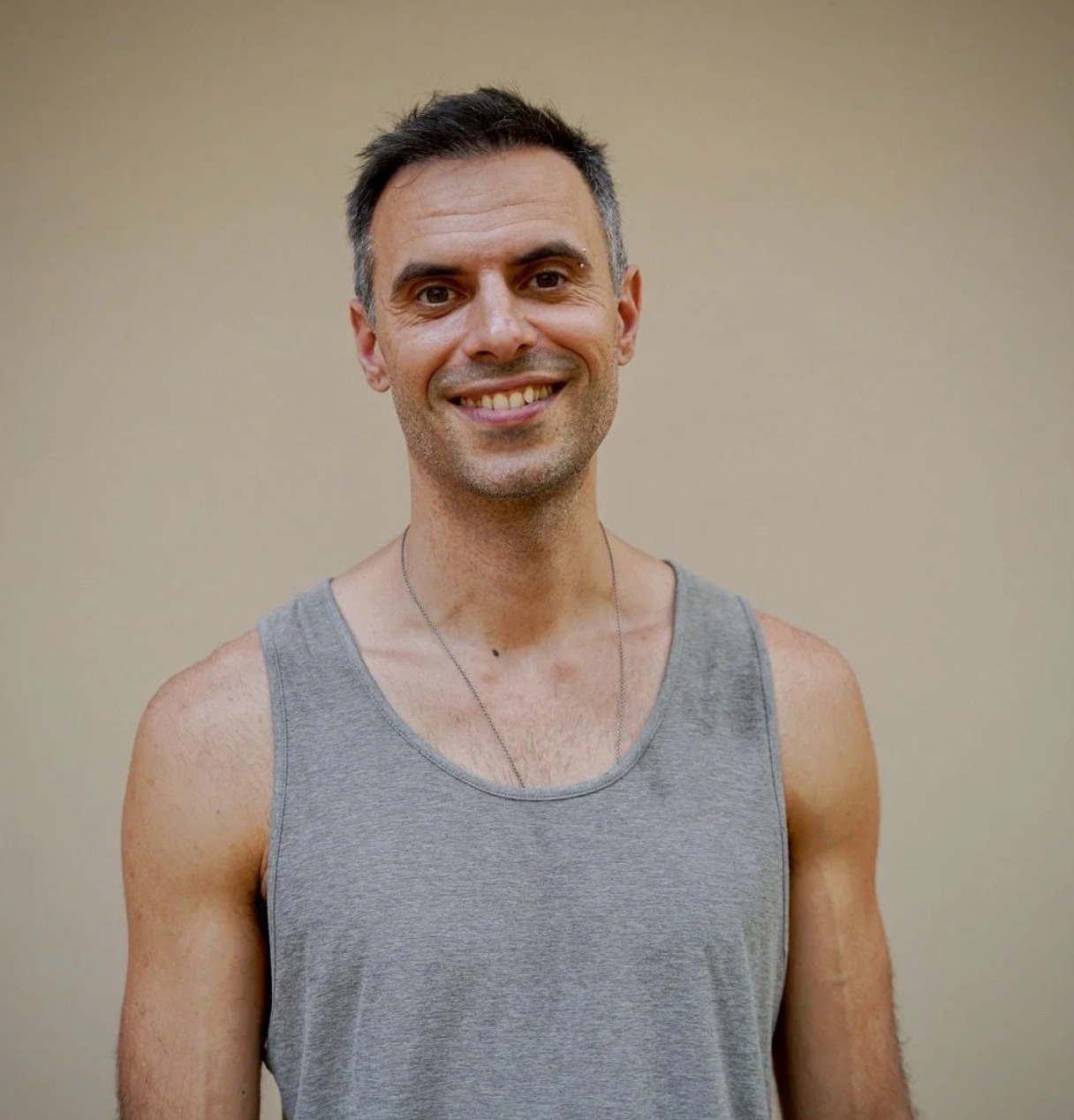
Ari Halbert
Ari Halbert is a licensed acupuncturist, holistic nutrition coach, Qi Gong instructor, and registered yoga teacher with 20 years of experience, Ari brings a diverse, multi-disciplinary approach to his work. His background in engineering, in-depth study of biomechanics, and hands-on training in human anatomy enable him to help clients recover quickly from injury, achieve greater overall stability, and build functional strength. Ari is an expert in breaking down complex movement principles in a way that is easy to digest and helps people to move with greater precision and control.
Learn More About Ari
Founding Teacher, Acupuncturist, Vinyasa Yoga, Katonah Yoga®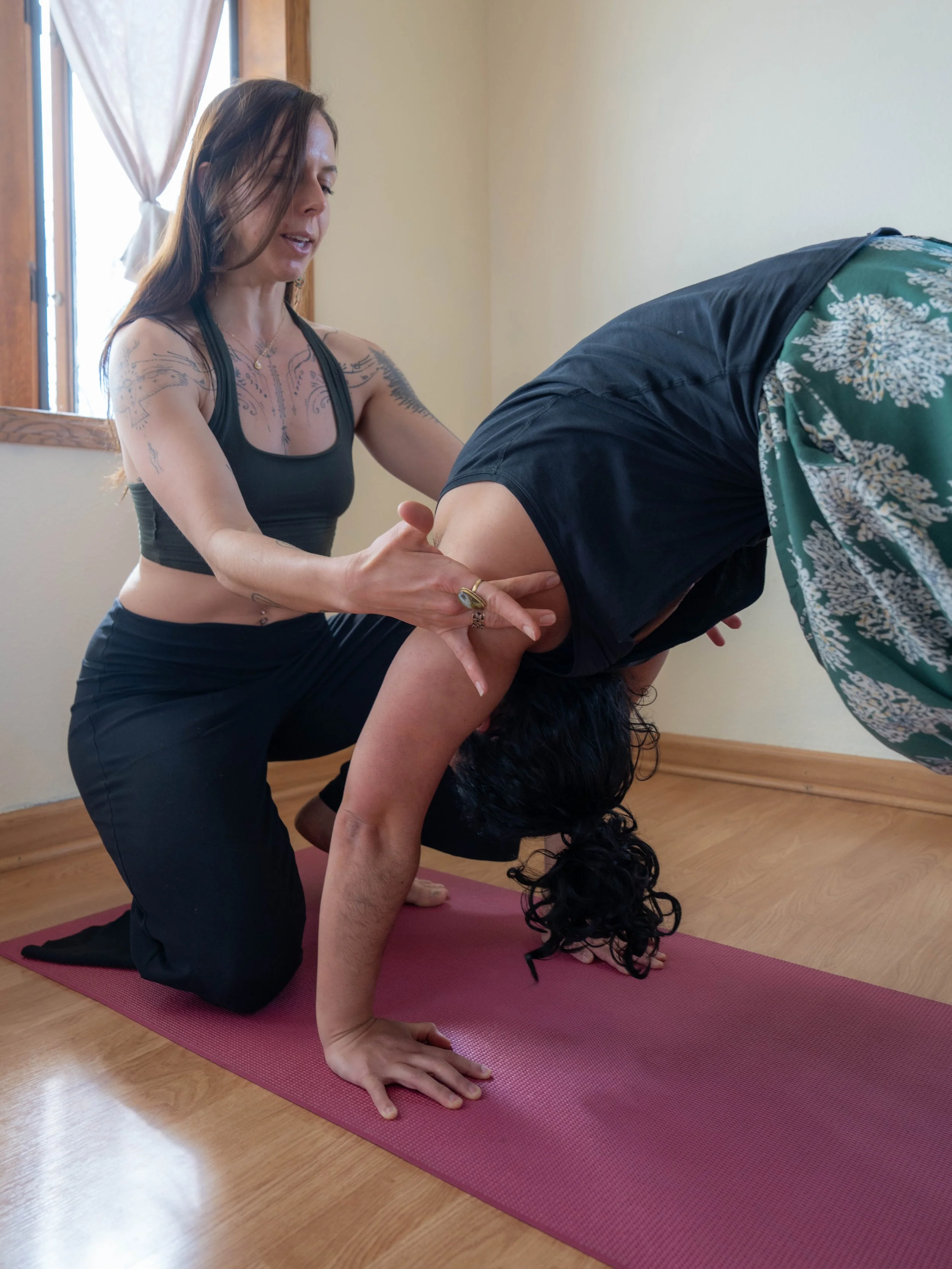
Founding Teacher, BFA in Dance, and ICF-accredited, Hakomi-trained Somatic CoachSteph Woods
Steph is a movement enthusiast, yoga teacher with 12+ years of experience, dancer, spiritual devotee, and lover of life. She nurtures as much healing and thriving into being as possible through various body-based approaches. Steph has been teaching yoga since 2013, has a BFA in Dance, and is an ICF-accredited, Hakomi-trained Somatic Coach. Currently, she is working on her Master’s in Somatic Counseling at Naropa University. Her yoga classes focus on alignment, spiritual connection, and nervous system regulation. As a long time yoga practitioner and teacher - and a lifetime dedicated mover - she does her best to provide you with those “ah-ha” moments in your practice.
Bridget Ryan
Founding Teacher, Studio ManagerBridget is a trauma-sensitive E-RYT 200 and has been drawn to movement modalities for the greater part of her life. Coming from a background in dance, she is passionate about honoring the body as a source of innate wisdom and exploring movement practices that foster greater sustainability and freedom. She completed her trauma-sensitive 200-hour training with Soulwork and the Integrative Somatic Trauma Therapy Certificate program through The Embody Lab.

Megan Reznicek
Founder Boulder Yoga Studio, CYT-600 HR Yoga Teacher, 6000+ Hours of teaching
Megan is a student first, and a teacher second. She’s been teaching for over a decade, Megan completed her 200-Hour training in Hatha Vinyasa at Providence Power Yoga and her 300-Hour training at Down Under School of Yoga, with additional specialized trainings in Pre-Natal Yoga and Hands-On Assists. She's currently immersed in an additional 200 hours of Katonah Yoga® study.
Request information
Have a specific question? Need more information?
We would love to hear from you.
What is yoga?
What is the body?
What is the breath, and the mind?
How do I live it?
How do I offer it?
How do I offer it to every body?
How do I sustain it?
Who am I as a teacher?
One question per weekend, in that order, each built on the one before it. You will answer the last one out loud, in front of the cohort, in May.
The eight weekend:
October: Foundations, and What is Yoga?
November: Functional Movement and Anatomy in Motion
December: Breath, Subtle Body, and Going Upside Down
January: Philosophy and Ethics Deep Dive
February: Sequencing and Class Design
March: The Anatomy of Adaptation
April: Practice Teaching and Professional Essentials
May: Practicum and Integration
272 hours, and where they go:
142 hours in the room across eight weekends:
Asana practice and applied anatomy, 36 hours
Teaching skills, sequencing, and practice teaching, 34 hours
Philosophy, ethics, and yoga humanities, 28 hours
Community, circles, and integration, 17 hours
Breath, meditation, and subtle body, 9 hours
Adaptive and inclusive teaching, 9 hours
Professional essentials, 6 hours
Plus 130 hours between weekends: a daily 20 minute practice log, one class a week at the studio, monthly philosophy reading, an anatomy observation journal, two peer teaches a month, two community classes you teach yourself, a full 60 minute class plan, and your personal teaching philosophy statement.
Anatomy is not a line item on that list, and that is deliberate. It lives inside the asana hours, which is why the total anatomy content is far larger than the number of hours labeled anatomy.
What "anatomy inside the asana" actually covers.
The spine, all five regions, and what neutral actually means. Joint types and what limits range of motion: bone, ligament, or tissue. Compression versus tension, and how to tell which one a student has met. Individual skeletal variation, including why some bodies will never reach certain shapes. Every major muscle group by name and function. Fascia and why slow holds behave differently. The autonomic nervous system, vagal tone, and what practices influence it. The diaphragm and three-dimensional rib mechanics. The pelvic floor and its relationship to mula bandha. The three planes of movement. Common injuries by region, and adapting rather than diagnosing.
And the traditional map alongside the Western one: the bandhas, the koshas, the nadis, the chakras, and the prana vayus. You leave fluent in both languages.
Props as intelligence, not remediation.
The body is sacred, not an obstacle.
Designing for the room, not the photo.
The art of watching before cueing.
What yoga can and cannot do.
What we ask of you
The weekends are the container. The eight months in between are where you become a teacher. Alongside the training weekends, you will:
Keep a daily personal practice, 20 minutes, five days a week
Take one class a week at the studio, included with your training
Read the assigned philosophy each month
Keep an anatomy observation journal
Practice teach with a peer twice a month in the second half
Teach two community classes at the studio in the final months
Write a full 60 minute class plan
Write your personal teaching philosophy statement
Teach a full assessed class in May
Who this is for
You do not need to be able to do a handstand. You do not need ten years of practice, or a particular body, or a plan to teach full time. You do need curiosity, and a willingness to be a beginner in front of other people.
Students with a consistent practice who want to understand the why underneath it
People who want to teach, whether that means a studio schedule, a community class, or their own living room
Teachers of other movement disciplines looking for a real yoga foundation
Longtime practitioners who want a structured year of study with no obligation to teach at the end